There is light in the Change Jungle · Part 3: Vision, Mission, Strategy
Detailed Exploration of Vision, Mission, Strategy, Actions and Tasks

VISION: Guiding beacon
MISSION: Reason for existence
STRATEGY: Plan to achieve vision and mission
ACTIONS: Projects & initiatives to implement strategy
TASKS: Activities to complete actions
Vision
Vision serves as the guiding beacon for an organization, outlining a future state that the organization aspires to reach. It is inspirational and aspirational, providing a long-term direction and a sense of purpose. A well-crafted vision statement should be clear, impactful, and resonate with all stakeholders, motivating them towards a common goal.
Example: A technology company might have a vision to “revolutionize the way the world uses renewable energy.”
Mission
Mission describes the organization’s reason for existence. It is more specific than the vision and focuses on the present duties of the organization. The mission statement outlines the organization’s core objectives and the approaches to achieving them, effectively bridging the gap between the organization’s identity and its operational goals.
Example: Following the technology company’s vision, its mission could be “to develop and distribute innovative, reliable, and affordable solar energy solutions to communities worldwide.”
Strategy
Strategy is the comprehensive plan devised to achieve the vision and mission of the organization. It encompasses the broad tactics and key priorities that will guide the allocation of resources and decision-making processes. Strategy acts as a roadmap, directing how the vision and mission will be operationalized in the medium to long term. It’s about setting priorities and making trade-offs to concentrate efforts on the most critical areas.
Example: The strategy might involve investing heavily in research and development, expanding into new markets, or forging strategic partnerships with other key players in the renewable energy sector.
Actions
Actions are specific projects or initiatives taken to implement the strategy. These are the tangible activities that the organization undertakes to move closer to achieving its strategic goals. Actions should be measurable and tied directly to the strategy, ensuring that every effort is strategically aligned and purpose-driven.
Example: One action could be launching a pilot project to test a new solar panel technology in a high-potential market, or initiating a marketing campaign aimed at educating consumers about the benefits of solar energy.
Tasks
Tasks are the individual activities or steps required to complete each action. They are the most granular level of work, directly contributing to the completion of actions, thereby fulfilling the strategy, and ultimately realizing the vision and mission. Tasks should be clearly defined, assigned, and scheduled, ensuring accountability and progress tracking.
Example: Tasks for launching the pilot project might include conducting market research, developing the prototype, obtaining necessary permits, and organizing community engagement sessions.
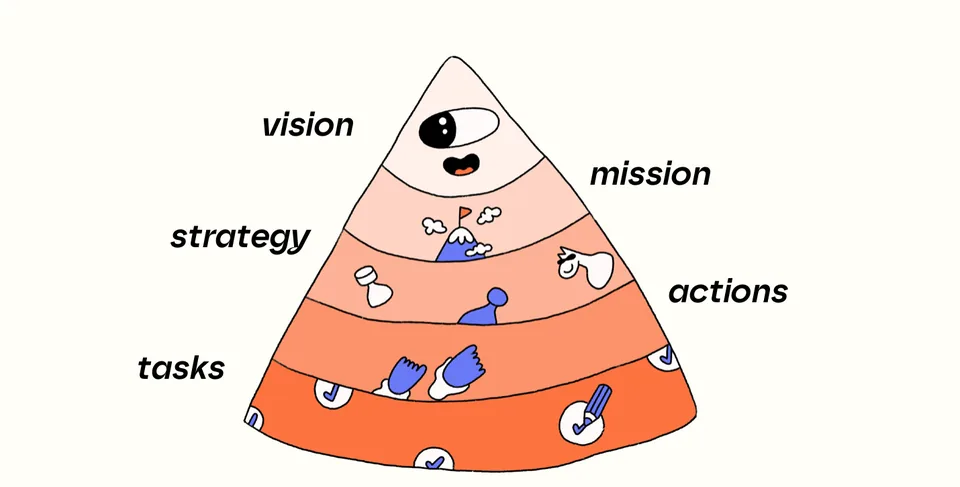
The Importance of Vision, Mission, Strategy, Actions, and Tasks
Why We Need Vision and Mission
A well-defined vision and mission are the compass and map for an organization’s journey. The vision serves as the ultimate goal, the beacon that guides long-term aspirations. The mission, on the other hand, defines the organization’s purpose, its reason for existing, and how it intends to serve its stakeholders in the present. Together, they provide a foundation for strategic planning, ensuring that every effort is aligned with the organization’s core objectives.
Strategies, Actions, and Tasks - The Pathway to Realization
With the vision and mission as the starting points, strategies outline the high-level plan to achieve these aims. They are the bridge between what an organization aspires to achieve and the practical steps it will take. Actions represent the specific initiatives or projects undertaken to execute the strategy, while tasks are the individual efforts required to complete these actions. This hierarchy ensures that daily operations are directly contributing to the organization’s overarching goals.
Conclusion
The transition from vision to action is a critical process in organizational management, necessitating a clear understanding of the interrelation between vision, mission, strategies, actions, and tasks. By following the structured approach outlined in this chapter and its subsequent sections, leaders can ensure that their organization’s efforts are coherent, strategic, and aligned with their ultimate objectives. The forthcoming exploration of vision and mission, followed by a deep dive into strategic planning and execution, will equip readers with the knowledge and tools needed to navigate this journey successfully.