There is light in the Change Jungle · Part 3: Vision, Mission, Strategy
Mastering SWOT Analysis for Strategic Insight
SWOT Analysis is a cornerstone of strategic planning, offering a straightforward yet powerful framework for organizations to assess their internal strengths and weaknesses, as well as external opportunities and threats. This chapter provides an in-depth exploration of SWOT analysis, guiding readers through its application in strategic planning and decision-making processes.
Understanding SWOT Analysis
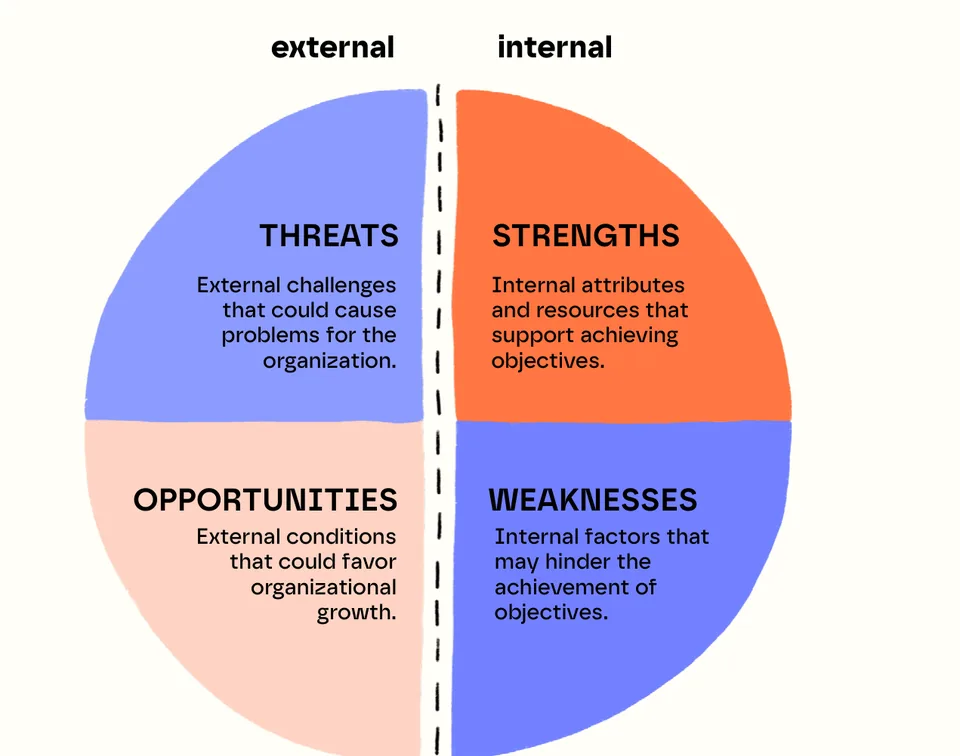
SWOT Analysis is a strategic planning tool that helps organizations identify and understand key factors that can influence their success or failure. It is divided into four components:
Strengths
Internal attributes and resources that support achieving objectives.
Weaknesses
Internal factors that may hinder the achievement of objectives.
Opportunities
External conditions that could favor organizational growth.
Threats
External challenges that could cause problems for the organization.
Conducting a SWOT Analysis: A Step-by-Step Guide
Preparation
Gather a diverse team from across the organization to ensure a comprehensive perspective. Prepare data and insights on your market, industry, and organizational performance.
Identify Strengths and Weaknesses
Focus on internal analysis. Assess your resources, processes, capabilities, and past performance. Strengths are assets to leverage for success, while weaknesses are areas needing improvement or mitigation.
Identify Opportunities and Threats
Turn your analysis outward to the external environment. Examine market trends, regulatory changes, technological advancements, and competitive dynamics to identify potential opportunities and threats.
Analysis and Discussion
Facilitate a structured discussion with your team to explore each element of the SWOT. Encourage open, critical thinking to delve deep into how each factor affects your organization.
Prioritize
Not all SWOT elements are equally impactful. Prioritize them based on their potential influence on your strategic goals, focusing on the most significant factors.
Strategic Planning
Use the insights gained from your SWOT analysis to inform your strategic planning. Leverage strengths, address weaknesses, capitalize on opportunities, and mitigate threats.
Best Practices for SWOT Analysis
Be Objective
Ensure that your analysis is grounded in reality, avoiding overly optimistic or pessimistic views.
Keep it Relevant
Focus on factors that are within your control or influence, and that have a direct impact on your strategic objectives.

Regular Updates
The external environment and internal capabilities evolve. Regularly updating your SWOT analysis ensures that your strategies remain aligned with current conditions.
Actionable Insights
The ultimate goal of SWOT analysis is to drive strategic actions. Translate your analysis into strategic initiatives that address the identified strengths, weaknesses, opportunities, and threats.
Leveraging SWOT for Strategic Decision-Making
Strategic Alignment
Ensure that your strategic initiatives align with your organization’s strengths and opportunities while addressing weaknesses and threats.
Risk Management
Use the insights from the threats analysis to develop risk management strategies that protect the organization.
Innovation and Growth
Opportunities identified in the SWOT analysis can be the foundation for innovation and growth strategies, guiding investment in new markets, products, or technologies.
Practical Advice For Leading a SWOT
There are several effective methods to begin collecting points for the Strengths, Weaknesses, Opportunities, and Threats categories. One proven approach is to start with a broad collector—a major asset or topic within the company—and then investigate it from the four perspectives. For example, to analyze the strengths of a significant asset, consider the following approach and questions to ensure that no important aspects are overlooked:
Strengths
- What does the organization excel at, compared to competitors, specifically related to this asset?
- What internal resources associated with this asset are superior (e.g., skills, expertise, technology)?
- What do others perceive as the strengths of this asset?
Weaknesses
- What are the biggest complaints from our stakeholders (customers, employees, partners) regarding this asset?
- In what areas related to this asset do our competitors have the edge over us?
- What internal processes connected to this asset need substantial improvement?
Opportunities
- What emerging market trends can we leverage because of this asset?
- Are there gaps in the market that this asset can help fill?
- Can we leverage the strengths of this asset to explore new opportunities?
Threats
- What obstacles are currently impacting the effectiveness or viability of this asset?
- How could changes in environmental, political, or economic factors impact the use or functionality of this asset?
- Are there any vulnerabilities in managing or utilizing this asset that could be exploited?
By selecting one significant topic and analyzing it using these detailed questions, you can systematically uncover a comprehensive understanding of each SWOT category. This method not only ensures that all important aspects are considered but also enhances strategic thinking and decision-making related to key company assets.
Conclusion
Mastering SWOT analysis equips organizations with critical insights into their operational environment and internal capabilities. By methodically assessing strengths, weaknesses, opportunities, and threats, leaders can make informed strategic decisions that propel their organization toward its objectives. As a fundamental component of strategic planning, SWOT analysis not only highlights areas for improvement but also illuminates paths to leverage for success, making it an indispensable tool in the strategic management arsenal.