There is light in the Change Jungle · Part 1: Psychology
Navigating the Psychology of Resistance to Change in Organizations

In the vast and intricate management jungle, understanding the psychological underpinnings of resistance to change stands as a beacon, guiding organizations through the tumultuous journey of transformation.
This chapter delves into the psychological barriers that often emerge within organizations facing change and offers strategies to navigate these challenges effectively.
As Marcus Aurelius highlighted, we must be aware that everything we consider in its given state exists because of changes. Everything is a result of changes. How could we even be born without it? Still, it is natural Wto try to be in a calm, usual, known environment. We all know that change is hard but inevitable; fighting against it can be fatal. To understand our own and our colleagues, friends, and families’ reasons behind the resistance, the following chapters try to support you.
“...everything we consider in its given state exists because of changes”
The Nature of Resistance
Resistance to change in organizations is a natural human response, rooted in deep-seated psychological needs for security, competence, autonomy, and relatedness. It manifests in various forms, from overt opposition to subtle sabotage, and stems from fear of the unknown, loss of control, and disruption of routine.
Recognizing these psychological factors is the first step toward addressing resistance constructively.
Recognizing the Root Causes
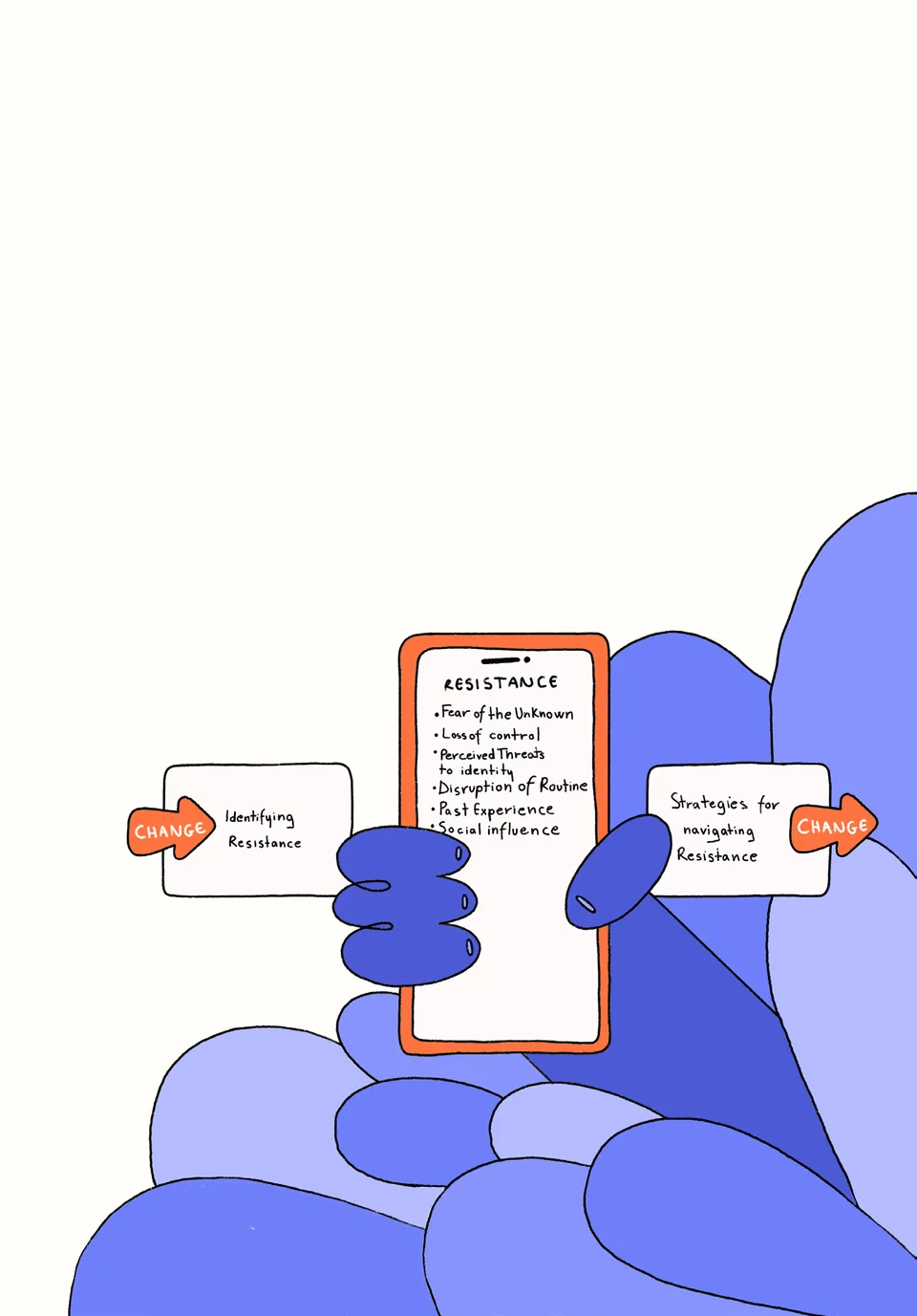
- Fear of the Unknown: One of the most common reasons for resistance is the uncertainty that change brings. Employees may worry about how changes will affect their roles, job security, and future within the organization. This fear stems from a lack of information or understanding of what the future holds.
- Loss of Control Change can disrupt employees’ sense of autonomy over their work and environment. When decisions are made without their input, individuals may feel powerless, leading to resistance as a means of asserting control.
- Perceived Threats to Identity Employees often identify strongly with their roles, teams, or the current organizational culture. Changes that alter these elements can threaten their sense of identity and belonging, leading to resistance.
- Disruption of Routine Humans are creatures of habit, and changes that disrupt established routines can cause discomfort. The effort required to learn new processes or adapt to new structures can be a significant source of resistance.
- Past Experiences Previous negative experiences with change can color employees’ perceptions of new initiatives. If past changes were poorly managed or led to negative outcomes, individuals might resist future changes out of fear of repetition.
- Social Influence Resistance can also be a collective response, influenced by peers. If key team members are resistant, their attitudes can spread, creating a broader culture of resistance.

Guiding Leaders in Identifying Resistance
Employee Surveys and Feedback Tools
Use anonymous surveys to gather honest feedback about employees’ feelings and concerns regarding the change.
Methodology
Develop questions that probe specific areas of concern, such as perceptions of the change’s impact on job security, workload, or organizational culture.
Advantages
Provides quantitative and qualitative data that can highlight widespread issues.
Limitations
It may not capture the full depth of individual emotions or specific interpersonal issues.
One-on-One Interviews
Conduct personal interviews with employees across various levels of the organization to gain deeper insights into individual perceptions and feelings.
Methodology
Use open-ended questions that allow employees to express their thoughts freely and provide personal anecdotes related to the change.
Advantages
Gathers detailed, personal insights that surveys might miss.
Limitations
Time-consuming and may not be feasible for very large organizations.
Focus Groups
Organize sessions with small groups of employees to discuss their views and feelings about the change.
Methodology
Facilitate discussions that encourage open dialogue among participants, potentially uncovering commonalities in resistance sources.
Advantages
It can reveal group dynamics and collective concerns that might influence resistance.
Limitations
Group settings may inhibit some individuals from expressing dissenting views.
Observation of Behavior Changes
Monitor changes in behavior that might indicate resistance, such as decreases in productivity, changes in communication patterns, or increased absenteeism.
Methodology
Implement regular monitoring of key performance indicators and note any deviations from typical behavior.
Advantages
Offers real-time, observable evidence of resistance.
Limitations
Behavioral changes can be ambiguous and may be caused by factors unrelated to the organizational change.
Exit Interviews
For employees who choose to leave the organization during the change process, conduct exit interviews to understand if the change influenced their decision to leave.
Methodology
Ask direct questions about the role of change in their decision to leave and any suggestions they have for managing change better.
Advantages
Provides insights from those who may have been most negatively impacted by the change.
Limitations
Feedback may be biased by the circumstances of their departure.

Strategies for Navigating Resistance
Addressing Fear of the Unknown
Enhance transparency by regularly communicating about the change process, timelines, and expected outcomes.
Implementation Steps
- Create a detailed communication plan that outlines how and when updates will be shared.
- Use multiple channels to disseminate information to ensure broad accessibility.
Expected Outcome
Reduced anxiety and increased trust in the change process.
Mitigating Loss of Control
Involve employees in the change process by incorporating their input into decision-making.
Implementation Steps
- Establish feedback mechanisms such as suggestion boxes or digital forums.
- Organize workshops where employees can voice concerns and contribute ideas.
Expected Outcome
Enhanced sense of ownership and commitment to the change.

Reducing Threats to Identity
Acknowledge and honor the past while framing the change as an evolution of the organization’s legacy.
Implementation Steps
- Organize events or communications that celebrate the history and achievements of the organization.
- Clearly articulate how the new direction builds upon past successes.
Expected Outcome
Preservation of organizational identity and increased alignment with the new direction.
Easing Disruption of Routine
Provide training and support to help employees adapt to new systems and processes.
Implementation Steps
- Offer comprehensive training sessions tailored to different roles within the organization.
- Provide ongoing support through help desks, FAQs, and peer support groups.
Expected Outcome
Smoother transition to new routines and reduced operational disruption.
Learning from Past Experiences
Utilize lessons learned from previous changes to inform the current strategy.
Implementation Steps
- Conduct a retrospective analysis of past change initiatives to identify what worked and what didn’t.
- Apply these insights to optimize current change management practices.
Expected Outcome
Improved effectiveness of change strategies and avoidance of past pitfalls.

Countering Negative Social Influence
Identify and engage change champions within the organization to promote positive perceptions of the change.
Implementation Steps
- Identify influential employees who are supportive of the change and can act as advocates.
- Equip them with information and tools to address peers’ concerns and promote positive messages.
Expected Outcome
Creation of a positive narrative around the change and mitigation of widespread resistance.
Conclusion
Navigating the psychology of resistance to change is a critical competency for managers leading through uncertain times. By understanding the root causes of resistance and employing strategies that address these psychological barriers, leaders can illuminate the path forward, transforming potential obstacles into stepping stones toward organizational growth and renewal.
This chapter sets the stage for exploring specific change management frameworks in Part 2, providing the foundational knowledge needed to approach change with confidence and empathy.